

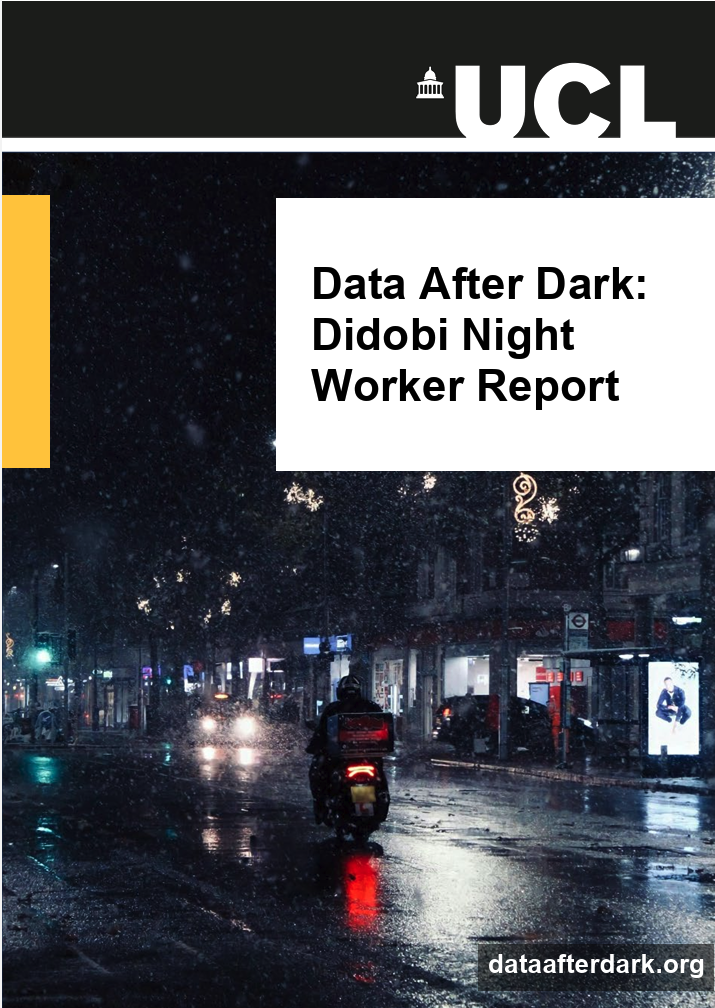
Data After Dark: Night Workers Report
This research, in partnership with University College London (UCL) and the Greater London Authority (GLA), seeks to establish a broader understanding of urban communities, culture, environment and opportunities after dark. It includes quantitative and qualitative methods to capture insights into a diverse range of night workers to help develop better policies to support a more inclusive night-time economy.
The night-time economy is the fifth biggest industry in the whole of the UK and plays a huge role in ensuring that London is one of the most visited cities in the world. The capital’s 1.32-million-night workers not only help keep the city running while most of us sleep but also contribute over £26 billion to the economy every year and support one in eight of London’s jobs. But even though this sector is increasingly recognised as essential to making places vibrant and liveable, we still know far too little about its workers. Data is patchy and much of what is available focusses on the physical and physiological impact of night shifts on workers’ health.
Our research seeks to start filling those gaps and find out what challenges night workers face across the capital. How do they get to and from work when their shifts take place during anti-social hours? What are their conditions like? And do they feel safe working at night? These are just some of the questions we asked workers across London to get a more detailed picture of their working environment and challenges faced getting to and from work. From emergency services and hospitality workers to cleaners and food delivery drivers, we heard a wide range of experiences. This variation can, in some ways, be divided between public sector unionised jobs and private sector non-unionised jobs. Those in unionised public sector roles, for example, largely enjoyed stable hours and better pay, status and conditions than those working in private sector roles such as hospitality, logistics and cleaning.
This research comes at a time when a raft of employment reforms is currently going through parliament. The new government has made a ‘New Deal for Working People’ a centrepiece policy to end exploitative practices and make work more secure. That legislation is starting to grapple with these issues will be welcomed by those working to keep London running throughout the night and ensure its night-time economy is enjoyed by all. But as we saw only too clearly, many workers still operate in the shadows without unions, workplace representation or any advocacy to help them. Their stories and experiences in the workplace continue to be unseen and remain unknown. And if policy changes are to properly grip these challenges to give all night workers the dignity and security they deserve, more research of this nature needs to be carried out to ensure their voices are properly heard.
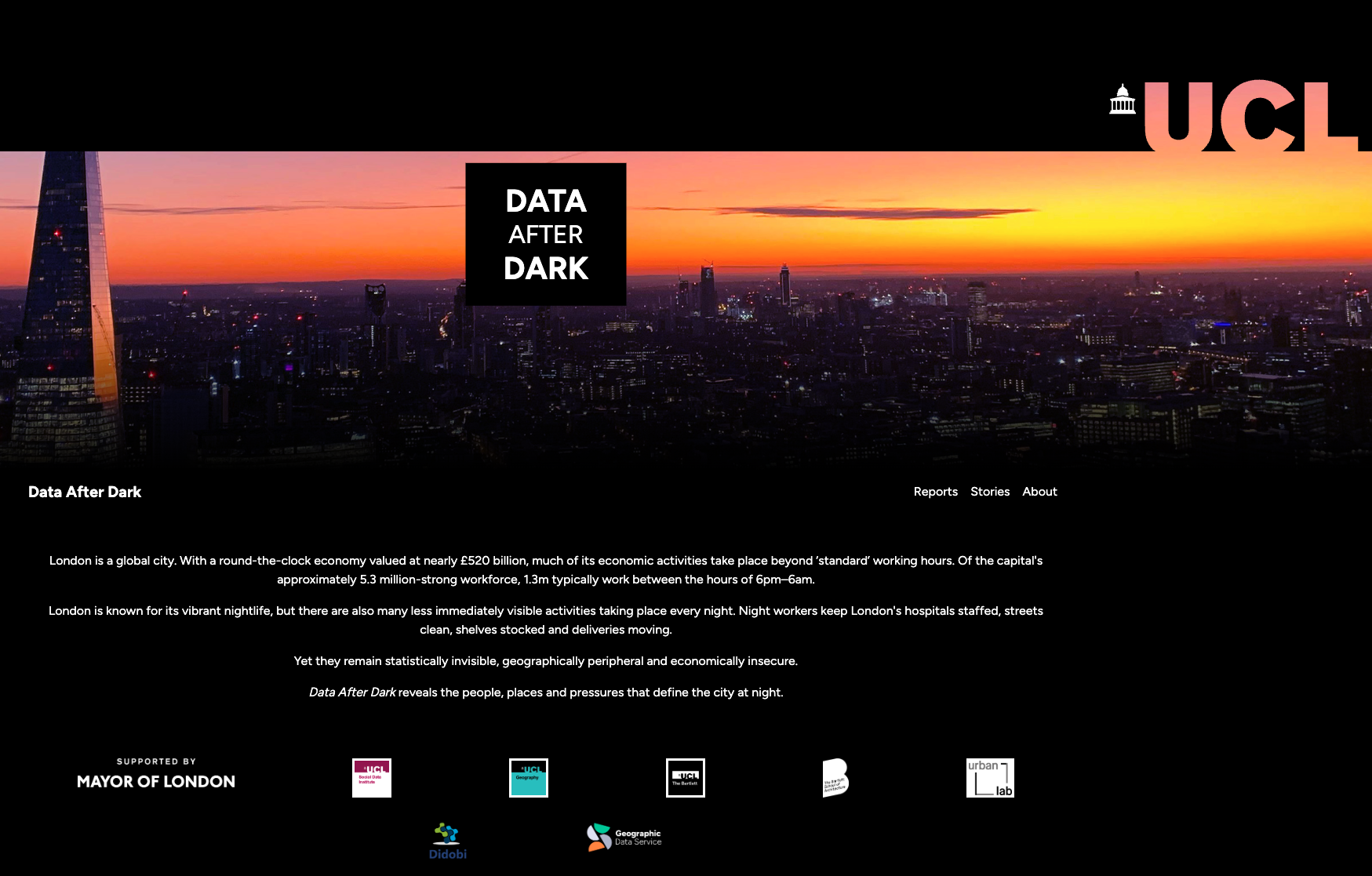
This report is part of the Data After Dark transdisciplinary research collaboration. The summary report, Data After Dark: New Evidence on Night Work in London, and additional research can be accessed here. Data After Dark was supported by the Mayor of London. This project has received support, advice, and funding from UCL Innovation & Enterprise.
https://dataafterdark.org/reports/Didobi-Night-Worker-Report.pdf

Leave a comment: